CJIS compliant data center and hosting for vendors and what agencies check
No data center is CJIS certified, because the FBI certifies no facilities, products or vendors. A data center is CJIS compliant for your product when the place your servers sit meets the physical protection rules of the CJIS Security Policy, CJI on its disks is encrypted with a FIPS validated module, and every person who can reach unencrypted CJI is screened and trained. For a software vendor, the hosting answer is only half done when you pick the facility. The other half is the paperwork that proves it for each agency. Cjis keeps that record, with one report per agency. Plans start at $49 a month.

Key points
- A provider's "CJIS ready" page is a starting point, not your evidence.
- The physical protection rules apply wherever unencrypted CJI can be reached, cage, rack or cloud region.
- Encryption at rest with keys you control often takes facility staff out of the screening question. Confirm it with the state CSA.
- Remote hands and contract technicians who touch your hardware are personnel questions.
- Agencies ask where the data sits, so keep the region or address on file per agency.
The hosting options vendors actually choose
Most law enforcement software vendors land on one of five setups. None is automatically compliant, and none is automatically ruled out.
| Hosting option | What you control | What the agency asks | Typical fit |
|---|---|---|---|
| Government cloud region (AWS GovCloud, Azure Government) | Your accounts, keys, configuration | Region, encryption, who at the provider can reach data | Vendors selling to many agencies in many states |
| Commercial cloud region with FIPS endpoints | Same, with more configuration work | Same, plus why not a government region | Smaller vendors with encrypted data and tight key control |
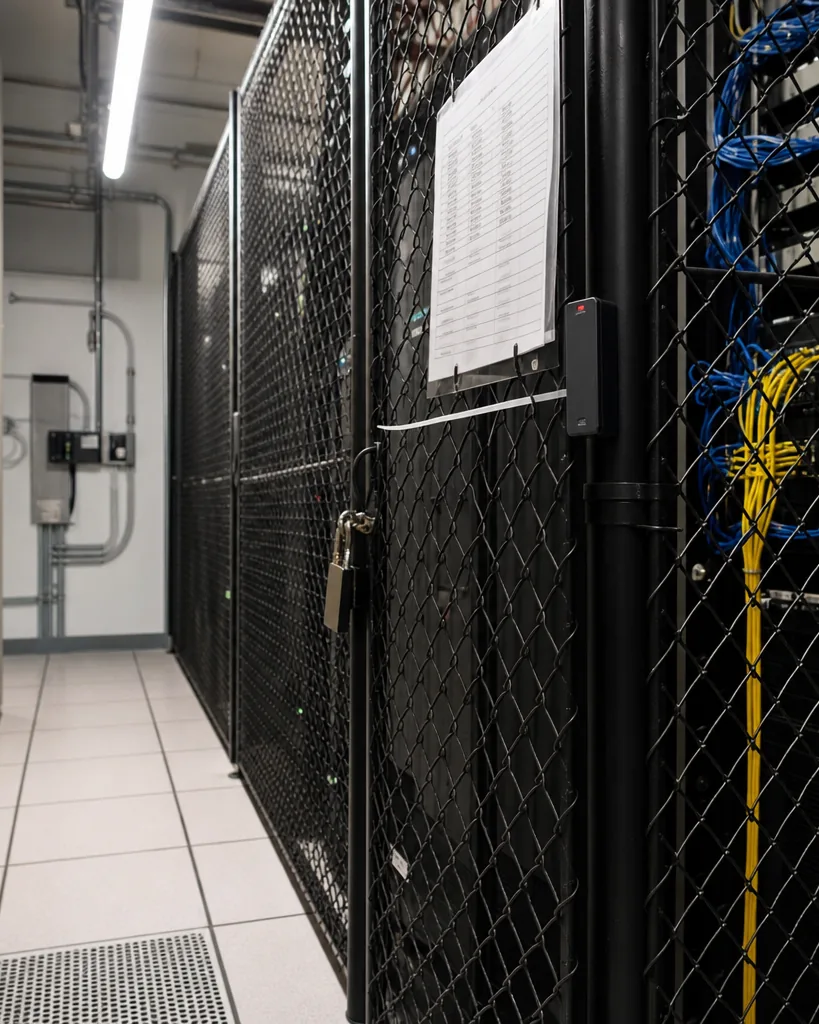
| Colocation cage in a commercial data center | Your hardware, the cage, the keys | Facility access list, escort rules, video, visitor log | Vendors with existing hardware or video heavy storage |
| A state approved CJIS hosting facility | Your hardware or virtual servers | Mostly answered by the state approval, plus your own staff | Vendors focused on one state |
| The agency's own data center (on premises install) | Your software only | Remote access, who on your team logs in | Agencies that refuse hosted products |
Cloud specifics are in CJIS compliance in AWS, Azure and Microsoft 365, and storage settings in CJIS compliant cloud storage for vendors.
The facility controls agencies check
An agency reviewer, or the state CJIS Systems Agency (CSA) on its behalf, wants to see that the place holding CJI is a physically secure location. In practice that means the same handful of controls, whichever provider you picked.
| Control | What the agency wants to see | Evidence |
|---|---|---|
| Perimeter and entry | Badge or biometric entry to the hall, locked cage or rack | Provider attestation, photo of the cage |
| Visitor control | Visitors escorted, logged and identified | Visitor log sample, escort rule |
| Authorized access list | A current list of who may enter your cage | Access list with dates |
| Monitoring | Cameras on entry points and the cage row | Provider attestation, retention period |
| Media protection | Failed drives wiped or destroyed before they leave | Sanitization record per serial number |
| Encryption at rest | CJI on disk encrypted with a FIPS 140 validated module | Disk or volume setting, module certificate number |
| Location | Data stays where the contract says, usually in the US | Region or facility address per agency |
The policy text is in the FBI CJIS Security Policy resource center, and the validated module list is the NIST Cryptographic Module Validation Program. Cipher wording is covered in CJIS encryption requirements.
Who in the data center needs screening
This is the question that decides cost. If CJI sits on your disks unencrypted and data center staff can reach it without an escort, those staff need fingerprint based record checks and security awareness training, which most colocation providers will not arrange for one tenant. If CJI is encrypted at rest with a FIPS validated module and only your company holds the keys, many CSAs accept that facility staff never reach CJI, and the screening question moves back to your own team.
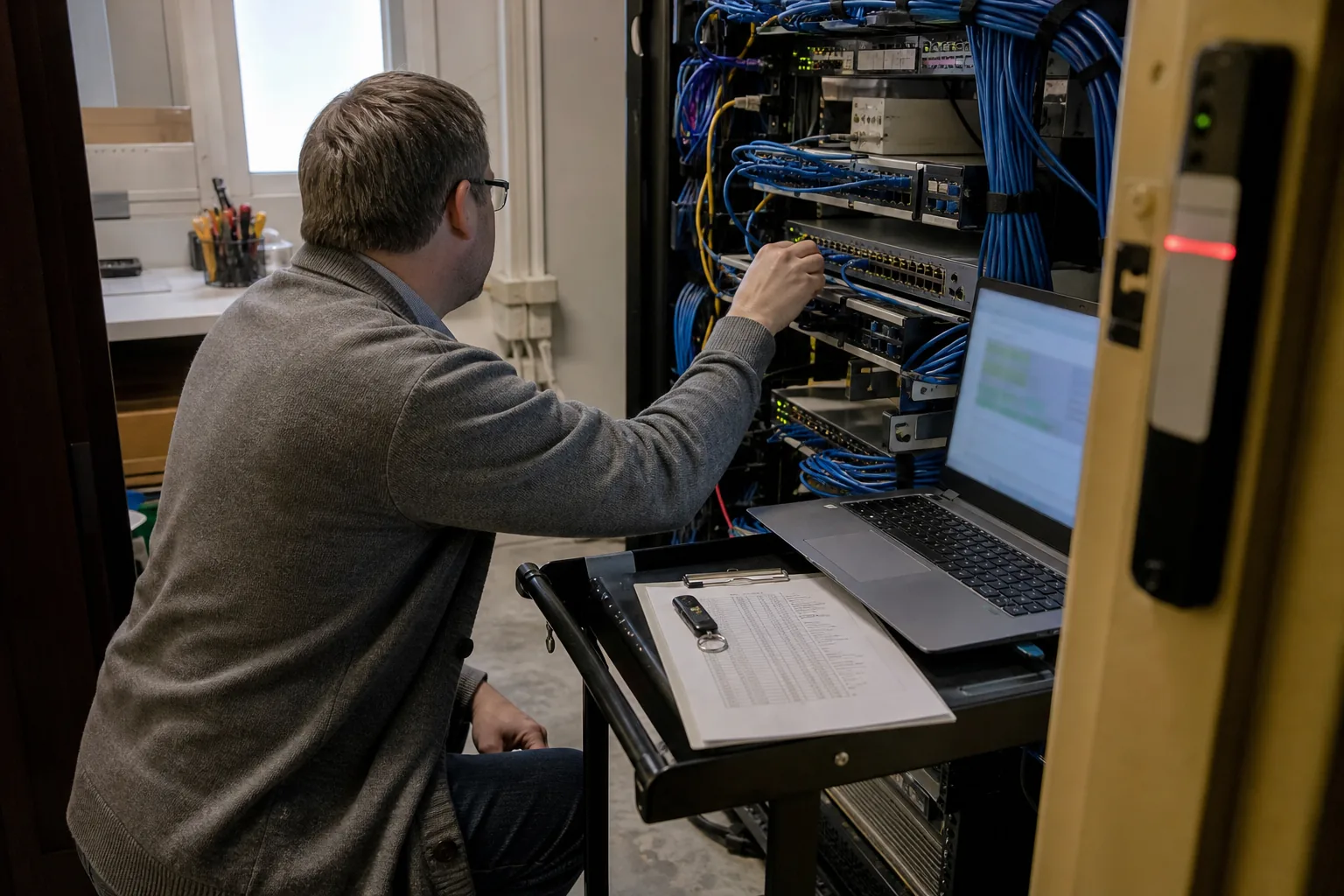
Your own team is still in scope. An engineer with root on the production database, a DBA who restores backups, an on call engineer who opens a support session: each can reach unencrypted CJI and needs the check, the training and a signed certification page under the addendum. Contract technicians count too. If you book remote hands or a freelance installer through a gig board such as Giglist to swap a drive or rack a server, that person is CJIS personnel the moment they can reach unencrypted CJI, so either escort them or put them in the register before the job. The CJIS Security Addendum for vendors post covers the signing side, and CJIS background check requirements covers the check itself.
A worked example for a vendor with 15 agencies
A records and evidence software vendor has 34 employees and 15 agency customers in 4 states. It runs production in a government cloud region and keeps 2 racks of video storage in a colocation cage, because storing body camera video in the cloud cost more than the hardware.
1. Map the locations. Case data for all 15 agencies sits in the cloud region. Video for 9 agencies sits in the colocation cage. Backups for both go to a second cloud region.
2. Check the encryption. Cloud volumes used FIPS validated encryption with keys in the vendor's own key service. The colocation storage arrays had encryption switched off for speed. Turning it on and moving keys to the vendor took the provider's staff out of scope for 9 agencies.
3. Count the people. Of 34 employees, 11 could reach unencrypted CJI: 5 engineers with production access, 3 support staff, 2 DBAs and 1 field technician who visits the cage. A contract technician booked twice a year is escorted and logged.
4. Collect the facility evidence. The colocation provider's physical security attestation, the cage access list (4 names), the visitor log for the quarter and the sanitization records for 6 failed drives.
5. Cut 15 reports. The 6 agencies with no video in the cage get the cloud section only. The 9 with video also get the cage access list and the drive records.
Encrypting the arrays was the cheapest fix in the review: one weekend of work instead of asking the provider to fingerprint its night shift. The numbers are illustrative, not data from a customer.
What to ask a data center before you sign
Ask these before the contract, not during an agency review:
- Can we get a written description of physical security controls we may share with agencies
- Who on your staff can enter our cage, and is every entry logged
- Are visitors escorted at all times, and can we get the visitor log for our row
- How are failed drives handled, and can we keep them in the cage until we destroy them
- Can remote hands work be done only under a ticket we approve, with the technician named
- Which US facility or region holds our data, and will it ever move without notice
If the provider cannot answer three of these in writing, plan for extra evidence work in every agency review, or pick a different provider.
What an agency asks about your hosting
- Where is our data stored, down to the region or the city
- Is it encrypted at rest, and who holds the keys
- Who at the data center can physically reach the servers
- Which of your employees and contractors can reach our data
- What happens to a failed drive that held our records
- Where do backups go, and are they encrypted too
Backups have their own rules, covered in CJIS compliant backup for vendors. The full bid paperwork is in CJIS RFP response for software vendors.
Turn the hosting answer into a record agencies can open
A vendor with fifteen agencies cannot rebuild this answer for every bid. Cjis maps your controls to CJIS Security Policy v6.0 and v5.9.5, attaches dated evidence such as the provider attestation and the cage access list to the control it supports, tracks every employee's check and training dates and exports a PDF or read-only link scoped to one agency. Records platforms with unredacted police files face the same review, see CJIS compliance for FOIA and records request software vendors, and SaaS teams can read CJIS compliance for SaaS companies. See what each plan includes on the CJIS compliance software pricing page.
Questions vendors ask about CJIS compliant data centers
Is there a CJIS certified data center?
No. The FBI does not certify data centers. Some states approve specific facilities for CJIS hosting, and providers publish CJIS pages, but each agency still reviews your setup. Keep the provider's attestation and your own controls on file for each agency.
Does CJIS require hosting in a government cloud?
No. The policy sets controls, not a brand of cloud. A commercial region can work when CJI is encrypted with a FIPS validated module, access is screened and logged and the location matches the contract. Some states and agencies still prefer a government region, so ask early.
Do data center employees need CJIS background checks?
Only if they can reach unencrypted CJI without an escort. When CJI is encrypted at rest and only your company holds the keys, many CSAs accept that facility staff are out of scope. Get that position in writing from the state CSA for each state you sell into.
Does CJI have to stay in the United States?
Agency contracts and many states require it, and agencies ask where data sits. Keep the region or facility address on file per agency and promise notice before any move. Hosting outside the US almost always ends the conversation.
What do we do with failed drives that held CJI?
Treat them as media that held CJI. Keep them under your control, wipe or destroy them under the media protection rules and keep a dated record per serial number. Many vendors pay for the option to keep failed drives instead of returning them.
Start with the records every agency asks for
Run the 12 question readiness check, see your gaps by policy area and build your first agency report. MSPs hosting for agencies can read CJIS compliance for managed service providers, and general buyers can start from CJIS compliance for vendors.