CJIS compliance for parking enforcement software and LPR parking vendors
Parking enforcement software only falls under CJIS when it touches criminal justice information: a stolen vehicle or wanted plate hotlist drawn from NCIC, or a plate lookup that runs through the police department's state switch. A plain permit check, a scofflaw list kept by the city or a registered owner lookup from the DMV is not CJI on its own. If your LPR parking product or handheld does carry those police returns, the city and its police department will review your cloud, devices and support staff against the CJIS Security Policy. Cjis gives parking enforcement vendors one workspace to prove it per city, with a readiness score, a staff register and a report for each customer. Plans are published and start at $49 a month.
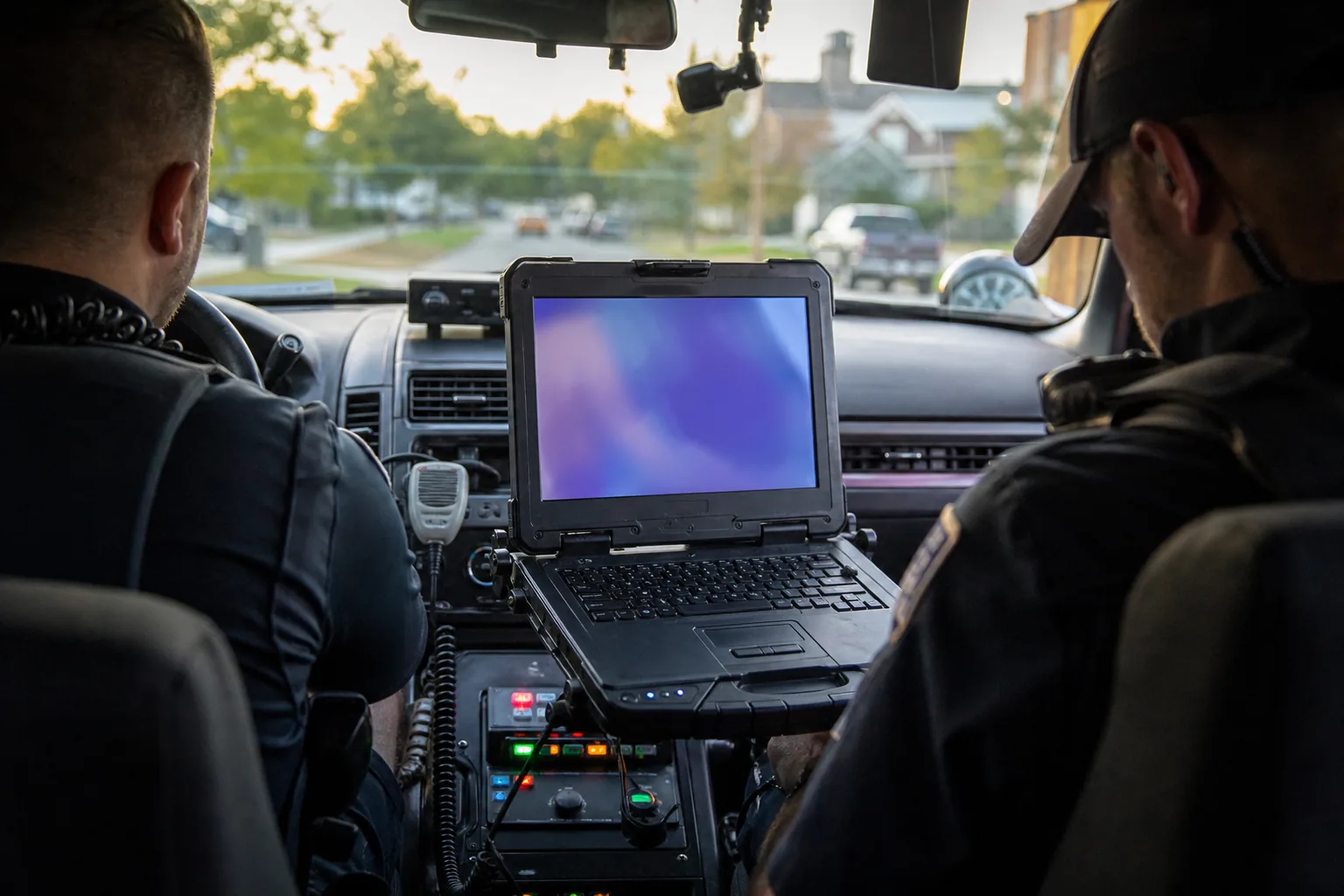
When a parking product is in CJIS scope
Most parking enforcement runs on city data: permits, paid sessions, citation history, boot and tow eligibility. None of that is CJI. The line moves when the police department shares what it gets from the state and FBI systems. The usual cases are a hot list loaded into the LPR camera so a parking car flags stolen plates, a handheld that shows a wanted or stolen return next to the ticket, and a parking unit that sits inside the police department and runs plates through the department's mobile data terminal.
- Find every feed that comes from the police department, not the city's parking office
- Check whether hotlist hits are stored with images and location history in your cloud
- Count the support staff who can open a hit record or a device log without an escort
Which parking data is CJI and which is not
Registered owner data has its own federal rule, the Driver's Privacy Protection Act, so a city can need DPPA controls even where CJIS does not apply. The FBI policy text sits in the CJIS Security Policy resource center.
| Data in the product | Usually CJI | Why | What the reviewer asks |
|---|---|---|---|
| Permits, paid sessions, zone rules | No | City records | Nothing under CJIS |
| City scofflaw and boot list | No | Unpaid fines kept by the city | Nothing under CJIS |
| DMV registered owner return | Depends | Covered by DPPA, becomes CJI if it arrives through the state CJIS switch | Which interface carries the lookup |
| NCIC stolen vehicle and stolen plate hotlist | Yes | Extract of an FBI hot file | Where the list is stored, who can see it, how often it refreshes |
| Wanted person or warrant flag on a plate | Yes | Criminal justice return | Who sees the alert, how it reaches an officer |
| Hit record with plate photo and location | Yes once tied to a hotlist hit | Joins CJI with surveillance data | Retention, access list, export log |
The controls a police reviewer checks on a parking system
When the police department signs off on sharing its hotlist with a parking vendor, the reviewer typically looks at the camera car, a handheld and the cloud console. These are the items that come up most.
Login wording is covered in CJIS advanced authentication and cipher wording in CJIS encryption requirements.
| Control | What the agency wants to see | Evidence |
|---|---|---|
| Encryption in transit | Hotlist downloads and hit uploads over an encrypted link | Cipher settings, FIPS validated module certificate |
| Encryption at rest | Hotlist and hits encrypted on the vehicle computer and in the cloud | Storage setting, key management note |
| Advanced authentication | Second factor for console users outside a secure location | Login policy, enrollment report |
| Role based access | Parking staff see a hit flag, not the full NCIC return | Role matrix, sample screen |
| Audit logging | Each hit view and export tied to a named user | Log fields, sample entry |
| Hotlist refresh and purge | Old lists replaced, expired hits removed | Refresh schedule, retention setting |
| Device control | Lost handhelds and vehicle computers wiped | MDM policy, lost device record |
| Remote support | Vendor sessions approved and logged | Support policy, session log, see CJIS compliant remote access software |
Hotlists are where parking vendors get caught out
A camera car that reads 10,000 plates a shift and checks them against a stolen vehicle list is doing police work with a parking budget. Agencies care about three things here. First, who loads the list and how often: an extract from the state switch that is days old produces bad stops. Second, what the parking officer sees: many cities show a simple "call dispatch" flag instead of the full return, which keeps civilian staff out of CJI. Third, what happens to the hit: a stored hit with a photo, time and GPS point is CJI joined to location data, and your retention setting decides how long it lives. The camera side of the same problem is covered in CJIS compliance for license plate reader and drone vendors.
- Record who provides each hotlist and the refresh interval per city
- Keep the role setting that hides returns from parking officers
- Set hit retention per city and keep the setting as evidence
Support staff, installers and city parking officers
Parking enforcement vendors install cameras, train officers and fix sync failures in the field. Any engineer or installer who can open hotlist hits or device logs without an escort needs a fingerprint based record check and security awareness training on file, and many states ask for that per state. City parking officers are a separate question for the agency, but your product decides what they can see. Cjis keeps role, access level, check date by state, training level, expiry and the cities each person is cleared for.
Read CJIS background check requirements for what the check involves and CJIS vendor screening programs for states that clear vendor staff once.
- Import the staff list by CSV and tag who can open hits or device logs
- Reminders 30 and 7 days before training expires
- A dated entry the day an installer or contractor leaves
- Training levels per role, see CJIS training levels
One record per city, campus and police department
A city parking office, the police department that owns the hotlist and a university parking unit each have a reviewer of their own. Cjis keeps shared controls and policies once, then a record per customer with its feeds, devices, staff, agreements and open items. Send a PDF or a read-only link scoped to one customer.
See every module on the CJIS certification software features page and start from the CJIS policy templates for mobile devices and media sanitization.
- One set of controls mapped to CJIS Security Policy v6.0 and v5.9.5
- Evidence dated and attached to the control it supports, such as the hotlist refresh setting
- Open items per customer, so the account manager sees what blocks the hotlist go live
- The same record feeds the security section of a bid, see CJIS RFP response for software vendors
A worked example for a parking vendor with 12 customers
A parking enforcement vendor has 22 employees. It serves 12 customers: 8 city parking offices, 2 university campuses and 2 airports. It runs 31 LPR camera vehicles and about 140 handhelds.
1. Sort the feeds. Only 4 of the 8 cities load a police stolen vehicle hotlist into the cameras. The campuses, the airports and the other 4 cities use permit and scofflaw lists only, so they get a short statement that no CJI is processed.
2. Fix the screens. The handheld showed the full NCIC return on a hit. Changing it to a "stolen, notify police" flag kept about 90 parking officers in the 4 cities out of CJI.
3. Fix retention. Hits were kept for 2 years with photos. The police departments asked for the agency setting instead, so retention is now set per city and the old hits are purged.
4. Count the people. Of 22 employees, 7 can open hits or vehicle computer logs: 3 engineers, 2 support staff and 2 field installers. They get checks and training.
5. Cut 4 CJIS reports. Each police department sees its hotlist route, cameras, staff list and policies. The other 8 customers get the short statement.
The numbers are illustrative, not data from a customer.
Ways a parking vendor keeps the CJIS record
Details in the Vanta CJIS alternative comparison and in CJIS compliance consultant vs software.
| Option | Cost | Strength | Weak spot |
|---|---|---|---|
| Spreadsheets and a shared drive | Staff time | Nothing to buy | No reminders, rebuilt for every city |
| Cjis | $49 to $999 a month, published | CJIS only, per customer reports, staff register | No automated device scans |
| Multi-framework platform | Quote only | Automated cloud tests across frameworks | Not built around per agency CJIS reports |
| CJIS consultant | Per engagement | State know-how | A snapshot that ages with every new city |
Plans that follow the number of cities with police feeds
Starter at $49 a month covers one agency report. Team at $199 covers three. Pro at $499 covers 25 agencies, which fits the example above with room to grow. Enterprise at $999 has no agency limit. Once your marketing dashboard, whether a spreadsheet or Mixedmetrics, shows which campaigns bring in city parking departments, the plan follows the cities that actually share police data. Compare limits on the CJIS compliance software pricing page.
Questions parking enforcement vendors ask about CJIS
Does parking enforcement software need to be CJIS compliant?
Only when it handles criminal justice information, such as an NCIC stolen vehicle hotlist or a plate lookup through the police department's state switch. Permit, payment and scofflaw data are city records. Once a police feed is involved, the cameras, cloud and support staff are in scope.
Is a DMV registered owner lookup CJI?
Not by itself. Registered owner data is protected by the Driver's Privacy Protection Act. It is treated as CJI when it arrives through the state CJIS message switch or together with a criminal justice return, so the route the lookup takes matters.
Do civilian parking officers need CJIS training?
Parking officers who see full NCIC returns need security awareness training and the agency's screening. Many cities avoid that by showing only a flag that tells the officer to call police, so the return never reaches civilian staff.
Is LPR parking enforcement software CJIS certified?
No product is. The FBI does not certify software or vendors. The police department and often the state CSA review your hotlist route, encryption, logging and screened staff. See what CJIS certification means.
Does the vendor sign the CJIS Security Addendum?
Yes, when your staff have unescorted access to unencrypted CJI for an agency. The agency signs with your company and each person signs the certification page. The CJIS Security Addendum for vendors post covers it.
Answer the police review before the hotlist goes live
Run the 12 question readiness check, see your gaps by policy area and build the first city report. Related reading is CJIS compliance for vendors, CJIS compliance for electronic citation software vendors and CJIS compliance for kiosk vendors.
What Cjis is and is not
Cjis is an independent compliance workspace, not affiliated with, endorsed by or certified by the FBI or the CJIS Division, and not legal advice. It does not read plates, load hotlists or manage devices, it does not connect to NCIC, a DMV or any state switch, and it never stores CJI.