CJIS compliance for court case management and e-filing vendors
A court case management or e-filing product stores charges, dispositions, warrants and protective orders next to party names. When a county court, a clerk of court or a state court administrator buys it, the security section of the contract asks how your cloud, engineers and support desk meet the CJIS Security Policy. Cjis gives your team one workspace to answer: a readiness score by policy area, a register of every employee with access, policy templates and a separate report for each court or state program. Plans are published and start at $49 a month.
When a court software vendor falls under CJIS
Courts are criminal justice agencies, and a case system that receives criminal history, warrant or driver record responses from a state system handles criminal justice information (CJI). A system that only holds the court's own filings may sit outside, but few products stay that clean. A single integration that pulls a rap sheet into a sentencing view pulls the whole stack into scope. The state CJIS Systems Agency (CSA) and the court decide where the line falls, so ask for the rule in writing before you answer the questionnaire.
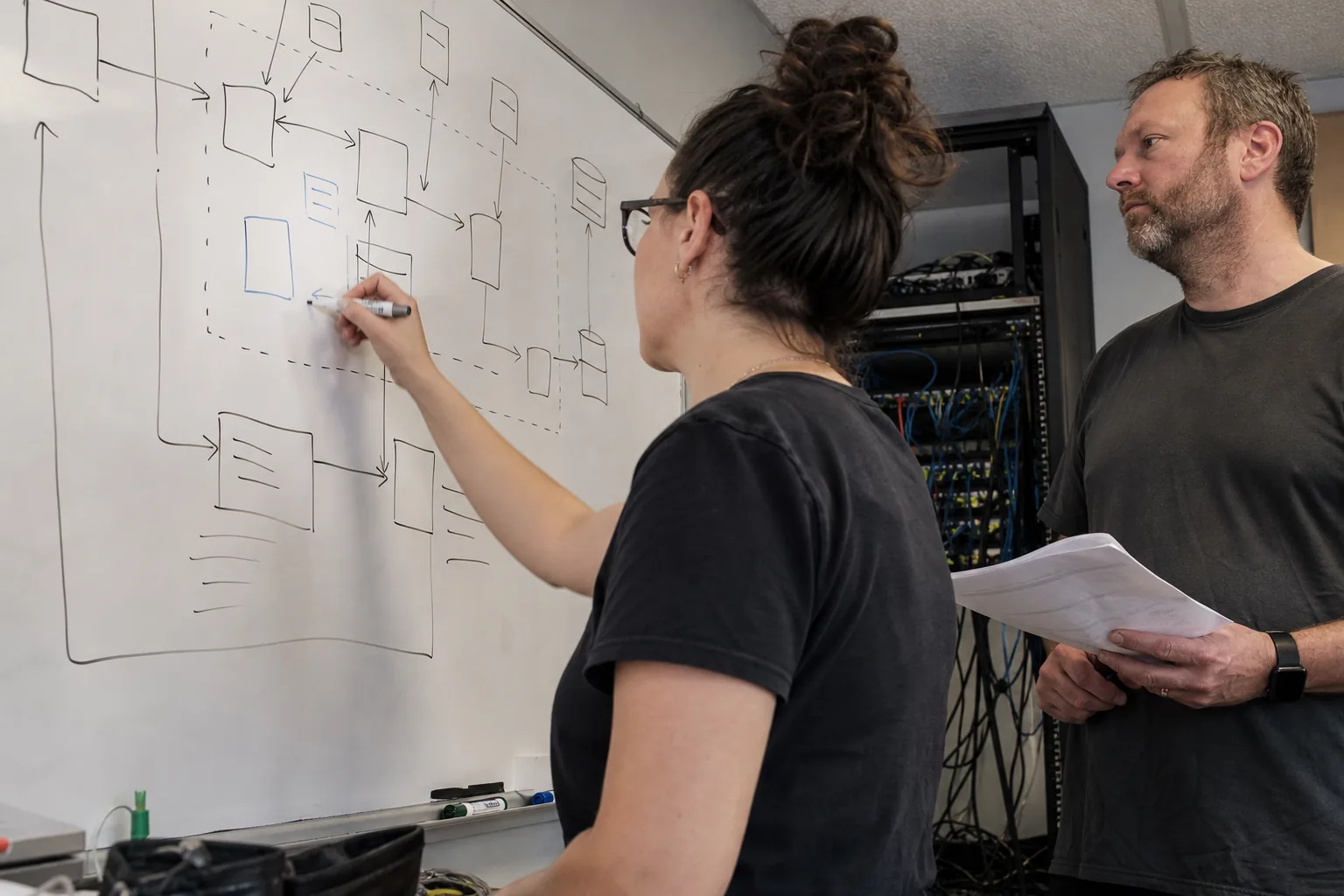
- Draw the boundary on a diagram: where filings, criminal history responses and party records are stored
- Separate the public portal from the clerk and judge workspace, because the two get different treatment
- Staff who can open a record that carries a response are in scope more often than vendors expect
Where CJIS touches a case management and e-filing stack
Hosting choices are covered in CJIS compliance in AWS, Azure and Microsoft 365 and key handling in CJIS encryption requirements. Vendors that also sell detention modules should read CJIS compliance for jail management software vendors.
| Product area | What the policy asks | What you document |
|---|---|---|
| Case management for clerks and judges | Access control, advanced authentication, session lock | Role model, MFA method, session settings |
| Integration with state criminal history or warrant systems | Protection of CJI in transit, controlled dissemination | Encryption, network path, who operates each hop |
| E-filing portal for attorneys and the public | Separation of public data from restricted records | What the portal can see, redaction rules |
| Document and exhibit storage | Encryption at rest, retention | Key management, backup location |
| Audit log of who opened which case | Logging and review | Fields logged, retention, review routine |
| Remote hearing and evidence upload tools | Remote access and media controls | Access list, recording storage |
| Support and implementation staff | Screened personnel and escorted access | Fingerprint dates, remote support method |
Who on a court software team counts as CJIS personnel
Implementation engineers migrate a court's old case data. Support staff connect to a hosted tenant to fix a docket that will not save. Developers read production logs that contain party names and case numbers. Anyone with unescorted logical or physical access to unencrypted CJI needs a fingerprint based record check and security awareness training, and some states repeat the check state by state. Cjis keeps role, access level, check date by state, training level, expiry and the courts each person is approved for.
See CJIS background check requirements for what the check involves, and CJIS vendor screening programs if you work in states that clear vendor staff once.
- Import the staff list by CSV and tag who can reach court data
- Reminders 30 and 7 days before training expires
- A visitor log note for escorted on site go live work until the check clears
- Log the day access is removed when someone leaves the project
A separate report for every court, county and state program
A court software vendor sells to one county, then to a state administrative office, then to a dozen more counties on the same contract vehicle. Each buyer has its own reviewer, its own wording and its own addendum. Cjis keeps shared controls and policies once, then a record per court with its systems, people, agreements and open items. Send a PDF report or a read-only link scoped to one court, so one county never sees another's staff names. Start from the CJIS policy templates for access control, incident response and the system boundary.
Official wording lives in the FBI CJIS Security Policy resource center. Your state CSA publishes its own vendor rules on top.
- One set of controls mapped to CJIS Security Policy v6.0 and v5.9.5
- Evidence dated and attached to the control it supports
- Open items by court, so sales sees what blocks a go live
- The security section of a bid answered from the same record, see CJIS RFP response for software vendors
A worked example for a vendor serving 14 county courts
A case management vendor serves 14 county courts and one state program, with 30 employees. Seventeen can reach production data, six are implementation engineers who sit in court clerk offices during go live, and 9 run support.
1. Split the product. The public e-filing portal shows filings only. The clerk and judge workspace shows criminal history responses. Only the second is in the CJI boundary.
2. Count the people. Of the 9 support staff, 5 only handle the public portal and billing. That leaves 4 support staff with workspace access, plus the 6 implementation engineers and 4 developers who read production logs, 14 people in all.
3. Record the evidence. Each of the 14 gets a check date by state, training level and expiry, and signs the certification page for the courts that ask for it.
4. Cut 15 reports. Every court and the state program receives the hosting boundary, personnel list and policy documents that match its rulebook.
Masking party data in the log view removed 4 developers from the screening list, usually the cheapest compliance step. The numbers are illustrative, not data from a customer.
Ways court software vendors keep the CJIS record
Details in the Vanta CJIS alternative comparison and in CJIS compliance consultant vs software.
| Option | Cost | Strength | Weak spot |
|---|---|---|---|
| Spreadsheets and a shared drive | Staff time | Nothing to buy | No reminders, rebuilt for every court |
| Cjis | $49 to $999 a month, published | CJIS only, per court reports, personnel register | No automated cloud tests |
| Multi-framework platform | Quote only | Automated tests across frameworks | CJIS is one framework among many |
| CJIS consultant | Per engagement | State know-how | A snapshot that ages |
Plans that match a growing court list
Starter at $49 a month covers one court report. Team at $199 covers three and fits a vendor in a few active implementations. Pro at $499 covers 25 courts, and Enterprise at $999 has no agency limit, which suits a statewide vendor live in many counties. Yearly billing halves the monthly rate. Compare limits on the CJIS compliance software pricing page.
Questions court software vendors ask about CJIS
Is a court case management system subject to the CJIS Security Policy?
When it receives or stores criminal history, warrant or similar responses for a court, usually yes. A system that holds only the court's own filings may fall outside. The court and its state CSA decide scope, so ask in writing.
Does an e-filing portal count as CJI?
A portal that shows only public filings is usually treated differently from the clerk workspace. If a protected record or a criminal history response can reach the portal, the agency will pull it into scope. Document what each portal screen can read.
Is there a CJIS certification for court software?
No. The FBI does not certify products or vendors. Courts review you through the Security Addendum, background checks, training records and evidence of controls. Read what CJIS certification means before a badge goes into sales copy.
Do implementation engineers need fingerprinting?
If they have unescorted access to a screen or database that shows unencrypted CJI, yes, and some states require it for each state. Escorted work with a visitor log entry may be allowed until the check clears.
Who signs the Security Addendum?
Your authorized representative signs the agreement with the court or state program, and employees with access sign the certification page. The CJIS Security Addendum for vendors post walks through it.
Answer the next court security review in days
Run the 12 question readiness check, see your gaps by policy area and build the first court report. More on CJIS compliance for vendors, probation software vendors and RMS and CAD software vendors.
What Cjis is and is not
Cjis is an independent compliance workspace, not affiliated with, endorsed by or certified by the FBI or the CJIS Division, and not legal advice. It does not run automated tests against your cloud account and it never stores CJI.