CJIS compliance for fingerprint and background check software vendors
A fingerprint capture, live scan or background screening product sits close to the center of the CJIS world. Your software collects prints, moves them toward state and FBI files and returns record responses. The agency, state repository or program that buys it will ask how your cloud, your engineers and your support desk meet the CJIS Security Policy before it signs or renews. Cjis gives your team one workspace to answer: a readiness score by policy area, a register of every employee with access, policy templates and a separate report for each agency or state program. Plans are published and start at $49 a month.
What an agency asks a fingerprint or background check vendor
Fingerprints are only the start. The questions follow the data. If your product submits prints for a criminal history check, receives a rap sheet or status response, or stores the answer next to a person record, you handle criminal justice information (CJI) or run close to it. Which rulebook applies depends on who the customer is. A police department, sheriff or court usually applies the FBI CJIS Security Policy and the Security Addendum to you. A non criminal justice program, such as a licensing board or an employer program that goes through an approved channeler, follows rules set by the state and the FBI Compliance Audit Unit. The state CJIS Systems Agency (CSA) has the last word on scope.
- Ask each customer which rulebook applies before you answer the questionnaire
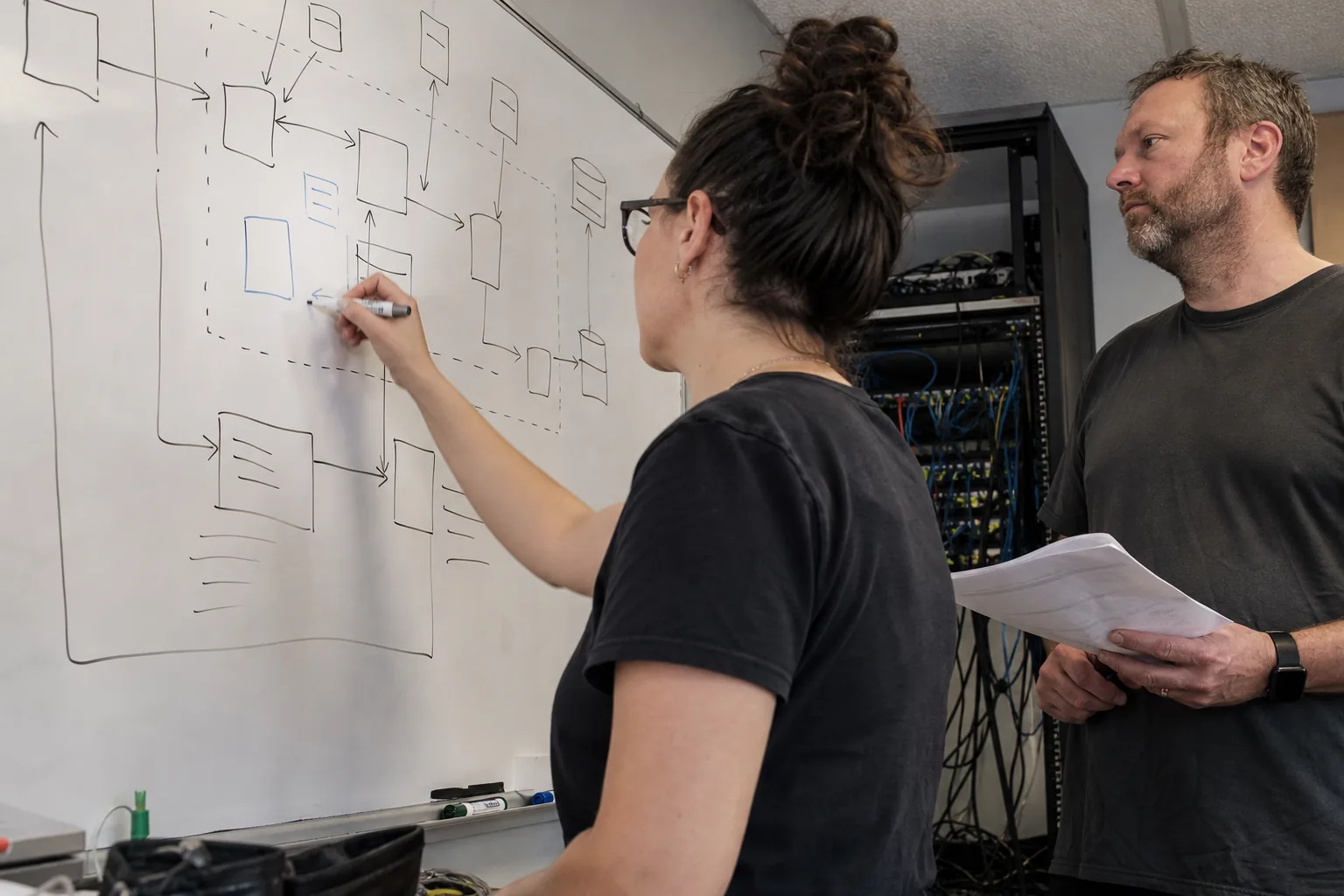
- Draw the line on a diagram: where prints, responses and person records are stored
- Staff who can open a record that carries a response are in scope more often than vendors expect
Where CJIS touches a fingerprint and screening stack
Hosting choices are covered in CJIS compliance in AWS, Azure and Microsoft 365, and key handling in CJIS encryption requirements. If you sell to jails for booking, read CJIS compliance for jail management software vendors.
| Product area | What the policy asks | What you document |
|---|---|---|
| Live scan station software and capture device drivers | Device and endpoint controls, patching | Device management, update process |
| Transmission of prints to a state repository | Protection of CJI in transit | Encryption, network path, who operates each hop |
| Return of criminal history or status responses | Controlled dissemination, access logging | Role model, audit log, retention |
| Applicant portal with name, date of birth and appointment data | Access control and data location | Hosting boundary, who can see applicant records |
| Background check dashboard used by agency clerks | Advanced authentication, session lock | MFA method, session settings |
| Mobile fingerprint units and field devices | Wireless and mobile device controls | Device enrollment, VPN or encrypted channel |
| Support, installation and field service staff | Screened and escorted personnel | Fingerprint dates, remote access method |
Who on a fingerprint vendor team counts as CJIS personnel
It is common for a fingerprint vendor to be the one company whose own staff are checked most often. Field technicians install stations in sheriff offices and walk past unlocked screens. Support engineers connect to a hosted tenant to debug a rejected print. Developers read production logs that include person data. Anyone with unescorted logical or physical access to unencrypted CJI needs a fingerprint based record check and security awareness training, and some states repeat the check for every state. Cjis keeps role, access level, check date by state, training level, expiry and the agencies each person is approved for.
See CJIS background check requirements for what the check involves, and CJIS vendor screening programs if you work in states that clear vendor staff once.
- Import the staff list by CSV and tag who can reach agency data
- Reminders 30 and 7 days before training expires
- A visitor log note for escorted installation work until the check clears
- Log the day access is removed when someone leaves
A separate report for every agency, state program and county
A fingerprint vendor sells to one sheriff, then to a state repository, then to a statewide school or licensing program. Each buyer has its own reviewer and its own wording. Cjis keeps shared controls and policies once, then a record per buyer with its systems, people, agreements and open items. Send a PDF report or a read-only link scoped to one customer, so one program never sees another's staff names. Start from the CJIS policy templates for access control, incident response and the system boundary.
Official wording lives in the FBI CJIS Security Policy resource center. For non criminal justice programs, ask the state program for its current channeler rules.
- One set of controls mapped to CJIS Security Policy v6.0 and v5.9.5
- Evidence dated and attached to the control it supports
- Open items by customer, so sales sees what blocks a renewal
- The security section of a bid answered from the same record, see CJIS RFP response for software vendors
A worked example for a live scan vendor with eight customers
A live scan vendor serves five sheriff offices, two state programs and one school district program, with 22 employees. Eleven can reach production data, four are field technicians who sit at customer stations. If you also sell the capture station as a self service unit, the cabinet and placement questions are in CJIS compliance for kiosk vendors.
1. Split by rulebook. The five sheriff offices apply the CJIS Security Policy and the Security Addendum. The two state programs bring their own addendum wording. The school district follows its state's non criminal justice rules.
2. Count the people. Of the 11 with production access, 3 only need log access with person data masked. That leaves 8 who need fingerprint checks and training, plus the 4 field technicians.
3. Record the evidence. Each of the 12 gets a check date by state, training level and expiry, and signs the certification page for the customers that ask for it.
4. Cut eight reports. Every customer receives the hosting boundary, personnel list and policy documents that match its rulebook.
Masking person data in the log view cut the screening list by three people, usually the cheapest compliance step. The numbers are illustrative, not data from a customer.
Ways fingerprint and screening vendors keep the CJIS record
Details in the Vanta CJIS alternative comparison and in CJIS compliance consultant vs software.
| Option | Cost | Strength | Weak spot |
|---|---|---|---|
| Spreadsheets and a shared drive | Staff time | Nothing to buy | No reminders, rebuilt for every bid |
| Cjis | $49 to $999 a month, published | CJIS only, per customer reports, personnel register | No automated cloud tests |
| Multi-framework platform | Quote only | Automated tests across frameworks | CJIS is one framework among many |
| CJIS consultant | Per engagement | State know-how | A snapshot that ages |
Plans that match a growing customer list
Starter at $49 a month covers one agency report. Team at $199 covers three and fits a vendor in a few active bids. Pro at $499 covers 25 agencies, and Enterprise at $999 has no agency limit, which suits a vendor live in many sheriff offices and state programs. Yearly billing halves the monthly rate. Compare limits on the CJIS compliance software pricing page.
Questions fingerprint and background check vendors ask about CJIS
Is a live scan or fingerprint capture product subject to the CJIS Security Policy?
When it transmits prints for criminal history checks or stores responses for a criminal justice agency, usually yes. A product that only captures images locally and never sends or stores CJI may sit mostly outside, but the agency and its CSA decide. Ask in writing.
Is there a CJIS certification for fingerprint software?
No. The FBI does not certify products or vendors. Agencies review you through the Security Addendum, background checks, training records and evidence of controls. Read what CJIS certification means before a badge goes into sales copy.
Do our field technicians need fingerprinting?
If they have unescorted access to a station or screen that shows unencrypted CJI, yes, and some states require it for each state. Escorted work with a visitor log entry may be allowed until the check clears. Each CSA decides what counts.
Do background check vendors for employers follow the same rules?
Not always. Non criminal justice use runs under separate FBI and state requirements, such as the outsourcing standard for channelers. The agency or state program tells you which set applies, and many vendors document both.
Who signs the Security Addendum?
Your authorized representative signs the agreement with the agency, and employees with access sign the certification page. Requirements differ by state. The CJIS Security Addendum for vendors post walks through it.
Answer the next agency security review in days
Run the 12 question readiness check, see your gaps by policy area and build the first customer report. More on CJIS compliance for vendors, probation software vendors and RMS and CAD software vendors. Courts that receive your responses are covered in CJIS compliance for court case management and e-filing vendors.
What Cjis is and is not
Cjis is an independent compliance workspace, not affiliated with, endorsed by or certified by the FBI or the CJIS Division, and not legal advice. It does not run automated tests against your cloud account and it never stores CJI.